Products overview
Products are sellable software packages you create in CNAP. They combine your application’s deployment configuration with pricing to enable customers to purchase and deploy your software through the or direct links. When you create a product, CNAP automatically creates a from your sources, generates a , and makes it available for deployment. Products with pricing automatically appear in the marketplace.

How Products Work

Products package your software for sale. Each product includes:
  • Deployment configuration - Helm charts and sources that define how your software runs
  • Pricing - Optional Stripe integration for customer billing
  • Cluster targeting - Which the product can be deployed to
  • Display settings - Custom images, descriptions, and visibility options
When customers purchase your product, CNAP automatically deploys it to the selected cluster after payment. Each customer gets their own isolated with dedicated resources.

Products and Templates

Products are powered by templates, which store your Helm source configurations. When you create a product:
  1. A template is automatically created from your Helm sources
  2. The template generates a versioned package (e.g., 0.1.0)
  3. The product references the template and adds pricing configuration
  4. Updates to the product’s sources update the underlying template
One template can power multiple products, or be deployed directly without pricing as a standalone install. Learn more about templates →

When to Use Products

Use products when you want to sell software to customers. Products are ideal for:
Open source projects can use CNAP to monetize by offering dedicated, managed deployments as a cloud service, giving each customer their own isolated resources without building multi-tenant infrastructure.Infrastructure & Data Services:
  • Database projects - PostgreSQL, MySQL, MongoDB, Redis, ClickHouse, TimescaleDB offering managed database-as-a-service with dedicated instances per customer
  • Message queues - RabbitMQ, Apache Kafka, NATS offering managed messaging services with dedicated clusters
  • Monitoring tools - Grafana, Prometheus, Loki offering managed observability stacks with dedicated deployments
  • API gateways - Kong, Traefik offering managed API gateway services with dedicated instances
Development & DevOps:
  • Development tools - GitLab, Gitea, Forgejo offering managed development environments with dedicated instances
  • CI/CD platforms - GitLab, Jenkins, Drone offering managed build pipelines with dedicated instances
  • Container registries - Harbor, Docker Registry, ZOT offering managed private registries with dedicated deployments
  • Source code management - Gitea, Forgejo, RhodeCode offering dedicated source code management instances
  • Issue tracking - Taiga, OpenProject offering managed issue tracking with dedicated instances
  • Code review tools - Gerrit, Phabricator offering managed code review platforms with dedicated deployments
  • Development environments - Per-customer development or staging environments with isolated resources
Business Applications:
  • Analytics platforms - PostHog, Plausible Analytics, Matomo, Metabase, Superset, Redash offering self-hosted analytics with dedicated instances per customer
  • Content management - WordPress, Ghost, Strapi, Directus, Payload CMS offering managed CMS hosting with dedicated deployments
  • Project management - Taiga, OpenProject, Wekan, Kanboard, Focalboard, Plane offering managed project management with dedicated instances per team
  • E-commerce platforms - Saleor, Medusa, Vendure offering managed e-commerce with dedicated stores per merchant
  • Workflow automation - Windmill, n8n, Activepieces, Automatisch offering hosted workflow engines with dedicated deployments per customer
  • Backend-as-a-Service - Appwrite offering managed backend services with dedicated deployments per application
Communication & Collaboration:
  • Team chat - Mattermost, Rocket.Chat, Zulip offering dedicated workspace instances per organization
  • Video conferencing - BigBlueButton, Jitsi offering managed video conferencing with dedicated infrastructure per organization
  • Email hosting - Mail-in-a-Box, Mailcow, iRedMail offering managed email servers with dedicated mail infrastructure per domain
  • Forum platforms - Discourse, Talkyard offering managed community forums with dedicated deployments per community
  • Social networks - Mastodon, Misskey, Pleroma, GoToSocial offering managed federated social networks with dedicated instances per community
  • Groupware - SOGo, Zimbra offering managed collaboration suites with dedicated deployments per organization
Content & Media:
  • File sharing - Nextcloud, ownCloud, Seafile offering managed file sharing with dedicated storage per organization
  • Document management - Paperless-ngx, Mayan EDMS offering managed document management with dedicated archives per organization
  • Media streaming - Jellyfin, Plex offering video streaming platforms with dedicated encoding infrastructure per customer
  • Media management - Sonarr, Radarr, Lidarr offering managed media automation with dedicated instances per user
  • Game servers - Dedicated multiplayer game server instances (Minecraft, Valheim, etc.) per customer
  • Content delivery - CDN services with dedicated edge deployments per customer
  • Live streaming - Real-time streaming services with dedicated infrastructure per customer
Specialized Services:
  • Learning management - Moodle, Canvas LMS, Chamilo offering managed LMS platforms with dedicated instances per institution
  • Password managers - Bitwarden, Vaultwarden offering managed password management with dedicated vaults per organization
  • Wiki platforms - BookStack, TiddlyWiki offering managed wiki hosting with dedicated knowledge bases per team
SaaS companies can offer dedicated deployments of their software for enterprise customers who require isolation:
  • Customer portals - B2B SaaS companies offering branded customer portals with account management and dedicated instances
  • Healthcare platforms - Patient portals, appointment scheduling, EHR integrations with HIPAA/GDPR compliance requiring dedicated deployments
  • Financial services - Trading platforms, payment processors, banking software with PCI DSS/SOC 2 compliance requiring dedicated instances
  • Collaboration tools - Mattermost, Rocket.Chat offering dedicated workspace instances for enterprise customers
  • Content collaboration - ownCloud, Nextcloud offering dedicated file-sharing and synchronization services
Offer managed database services with dedicated deployments for each customer:
  • CockroachDB Cloud - Distributed SQL database with dedicated clusters per customer
  • MongoDB Atlas - Managed MongoDB with dedicated clusters per customer
  • TimescaleDB Cloud - Time-series database with dedicated deployments per customer
  • Redis Cloud - Managed Redis with dedicated clusters per customer
  • ClickHouse Cloud - Analytics database with dedicated instances per customer
  • Custom database services - Your own database offering with per-customer isolation
Build and sell your own custom software applications:
  • B2B SaaS applications - Any software you build and sell to businesses with dedicated deployments
  • Industry-specific software - Healthcare, finance, legal, or other industry-specific applications requiring isolation
  • Internal tools as products - Turn internal tools into sellable products with dedicated instances
  • White-label solutions - Software that customers can brand and customize with dedicated deployments
Products with Stripe pricing automatically appear in the marketplace, making them discoverable to all CNAP users. You can also sell products directly by linking to the product’s deployment page from your own website.

Products vs. Direct Installs

Products and direct installs serve different purposes:
  • Products - For selling software to customers with optional Stripe integration. Appear in the marketplace when pricing is configured.
  • Direct installs - For internal tools, shared databases, or monitoring systems. No pricing, not listed in the marketplace.
Both use templates automatically created from your Helm sources. Learn more about application deployments →

Creating a Product

Onboard your product through the Products Dashboard.
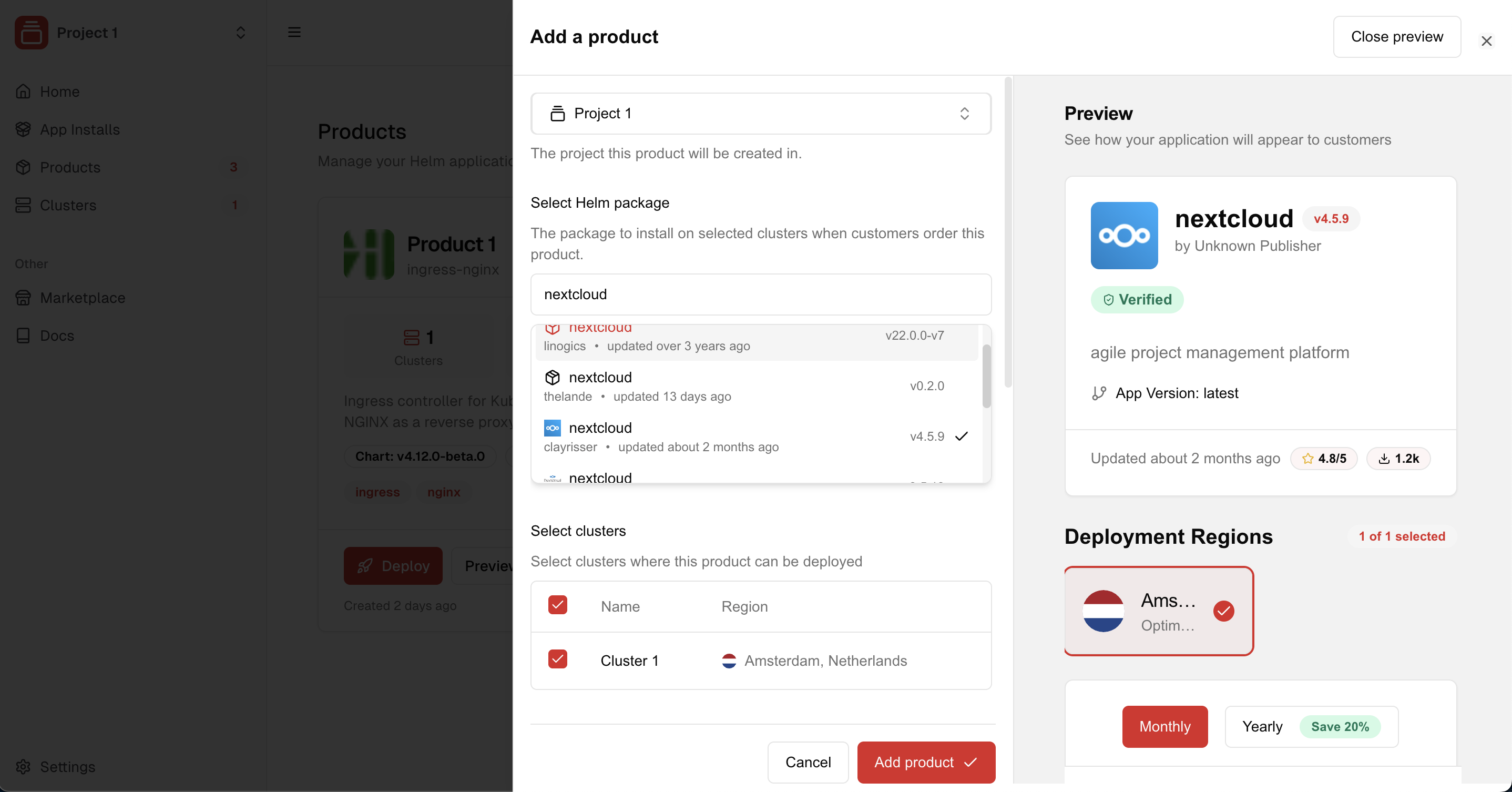
adding a product
You can select the Helm package from Artifact Hub.
Our roadmap includes support for Helm charts hosted on private Git/OCI repositories in the near future.
Select to which the product can be deployed. Users will only see the regions of the clusters when they are deploying the product. Checkout Clusters for more information.

Pricing products

If you require users to pay for deployments of a product, you can link a CNAP product with one or more from one or more .
1

Connect with Stripe

Make sure to connect with Stripe in the Settings of your workspace to onboard with a to CNAP.

connect stripe
2

Create Stripe prices

Once Stripe is connected, you can associate Stripe prices with the CNAP product.
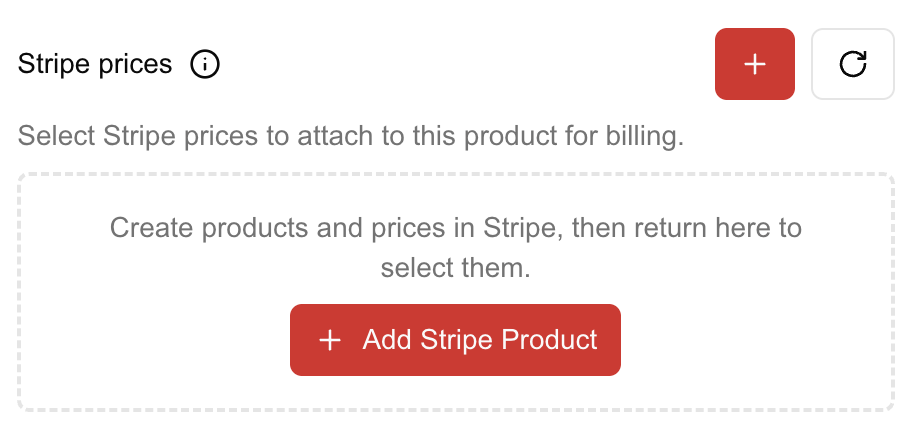
empty prices
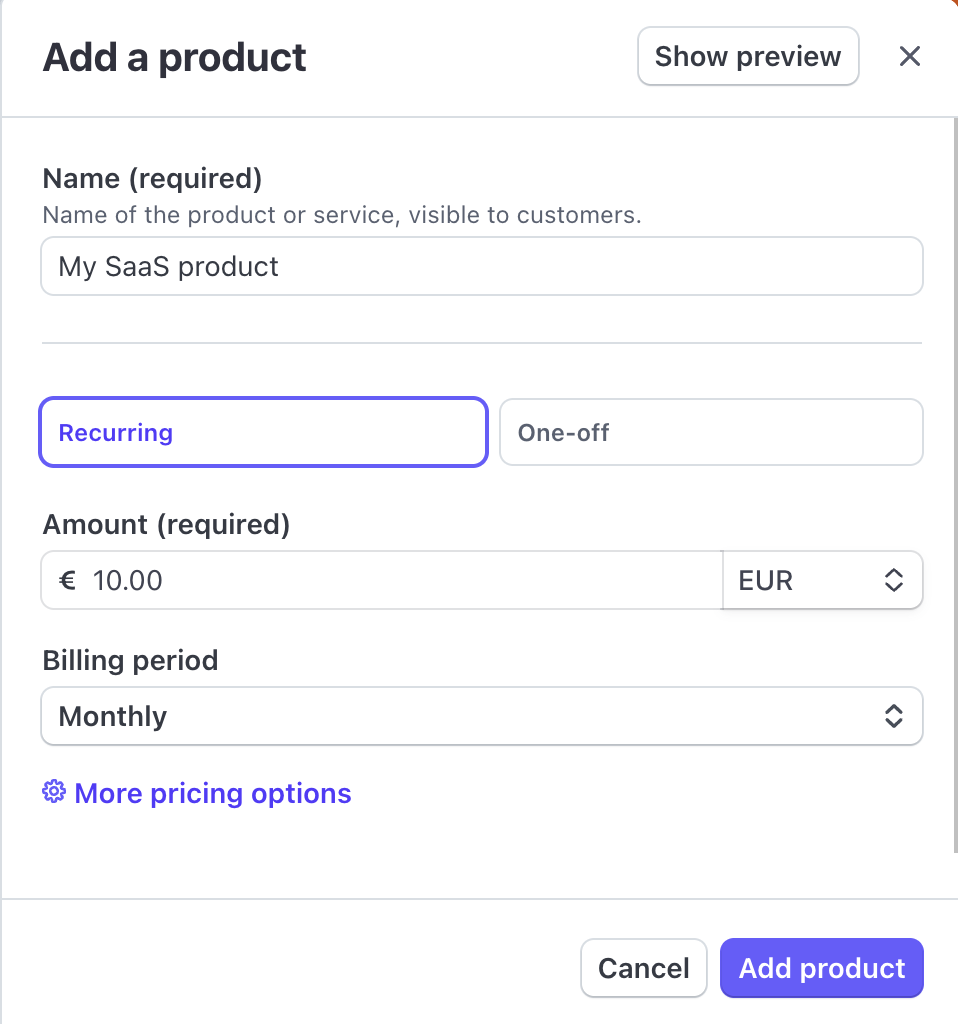
Create a Stripe product with prices in the Stripe dashboard.
stripe add product
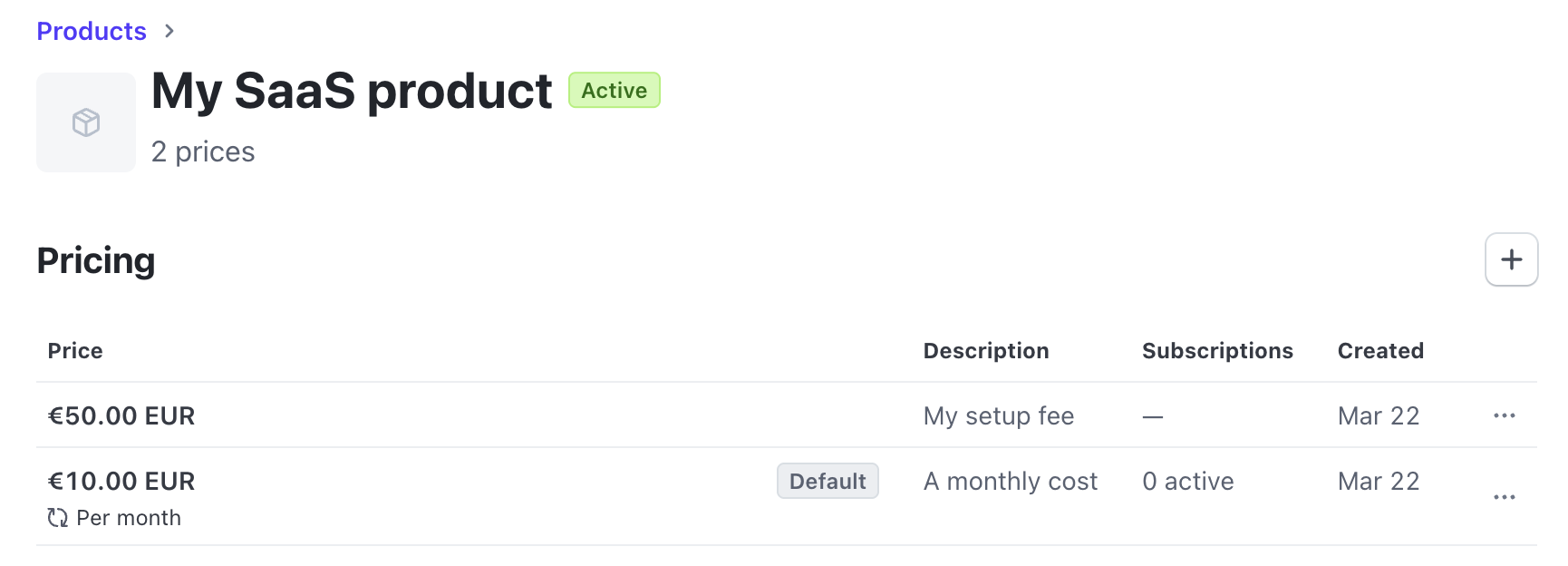
You can edit the Stripe product to add even more prices, e.g.:
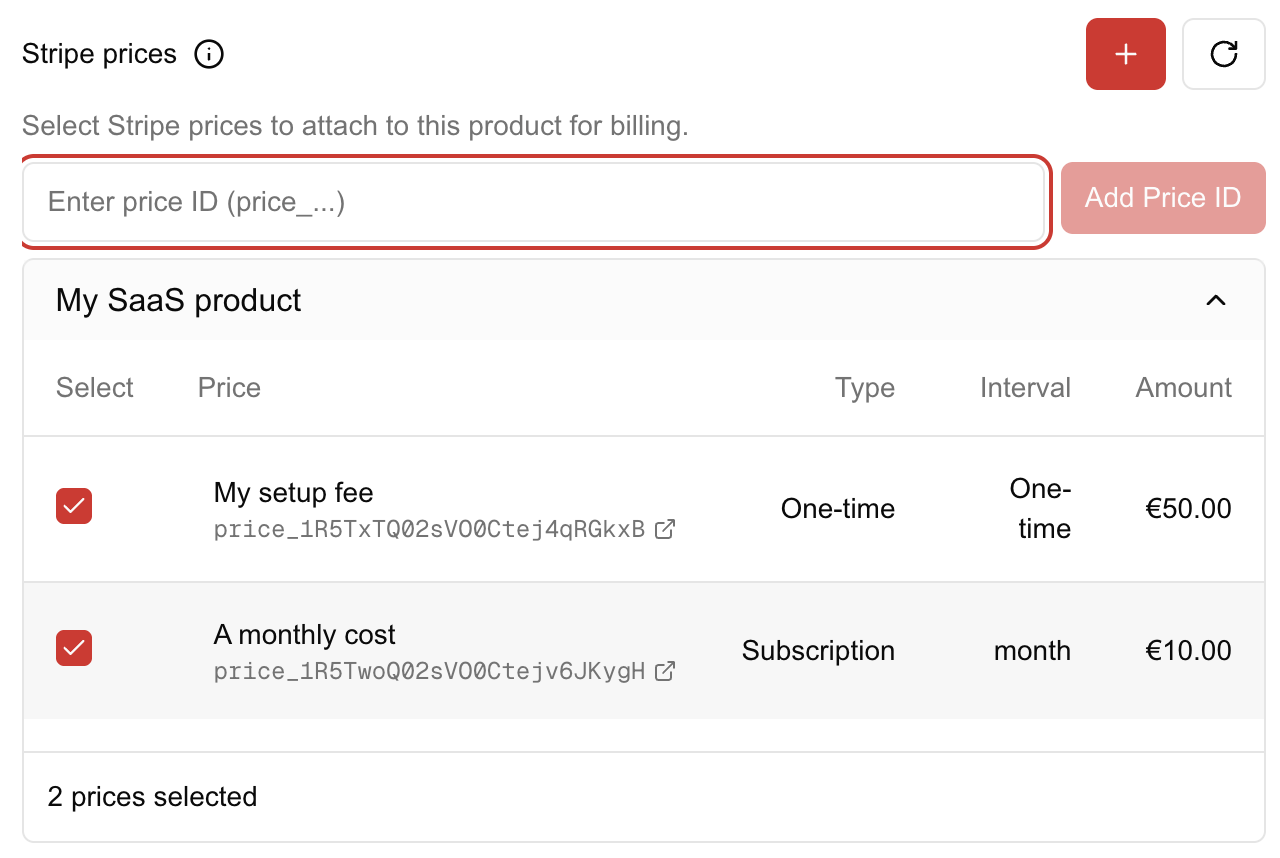
  • €10/month subscription
  • €50 one-time setup fee
stripe edit product
3

Select Stripe prices

As soon as the Stripe products and prices are created, they will be immediately loaded and available for selection in CNAP.
price selection
All prices you select for the CNAP product will apply when users checkout the product in the marketplace. You can also create more Stripe products and select their prices for the same CNAP product if you need to (e.g. a deployment consists of multiple services).
Click “Add Product” to create the product.
Congrats! You’re set up to start your hosting, and it’s batteries included! Need support or want to give some feedback? You can join our Discord-Community or drop us an email at [email protected].